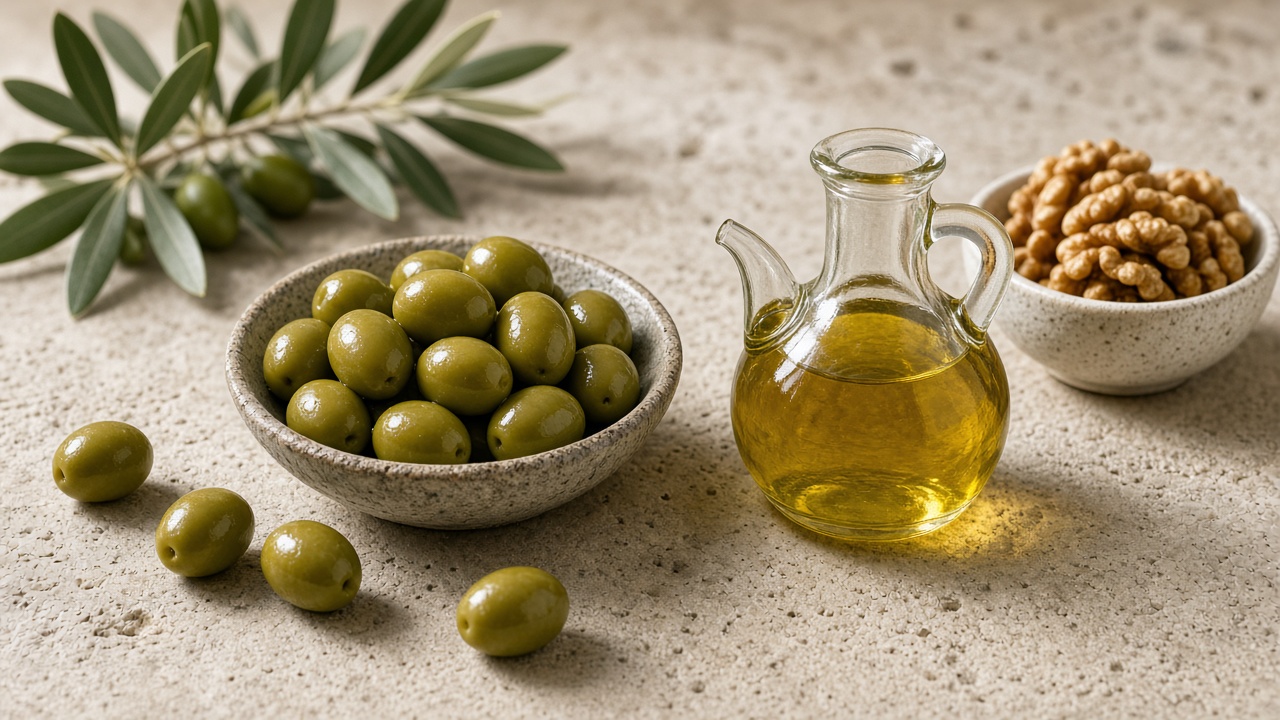
PREDIMED: what the trial showed and what it did not
PREDIMED, the paper by Estruch and colleagues in the New England Journal of Medicine, studied adults at high cardiovascular risk. It compared a Mediterranean diet supplemented with extra-virgin olive oil, or with mixed nuts, with a control group advised to eat less fat. The Mediterranean groups had fewer major cardiovascular events. The 2013 paper was retracted and republished in 2018 because of randomization problems; the republished paper still reported fewer events. It was not a weight-loss trial, and this page states no percentage.
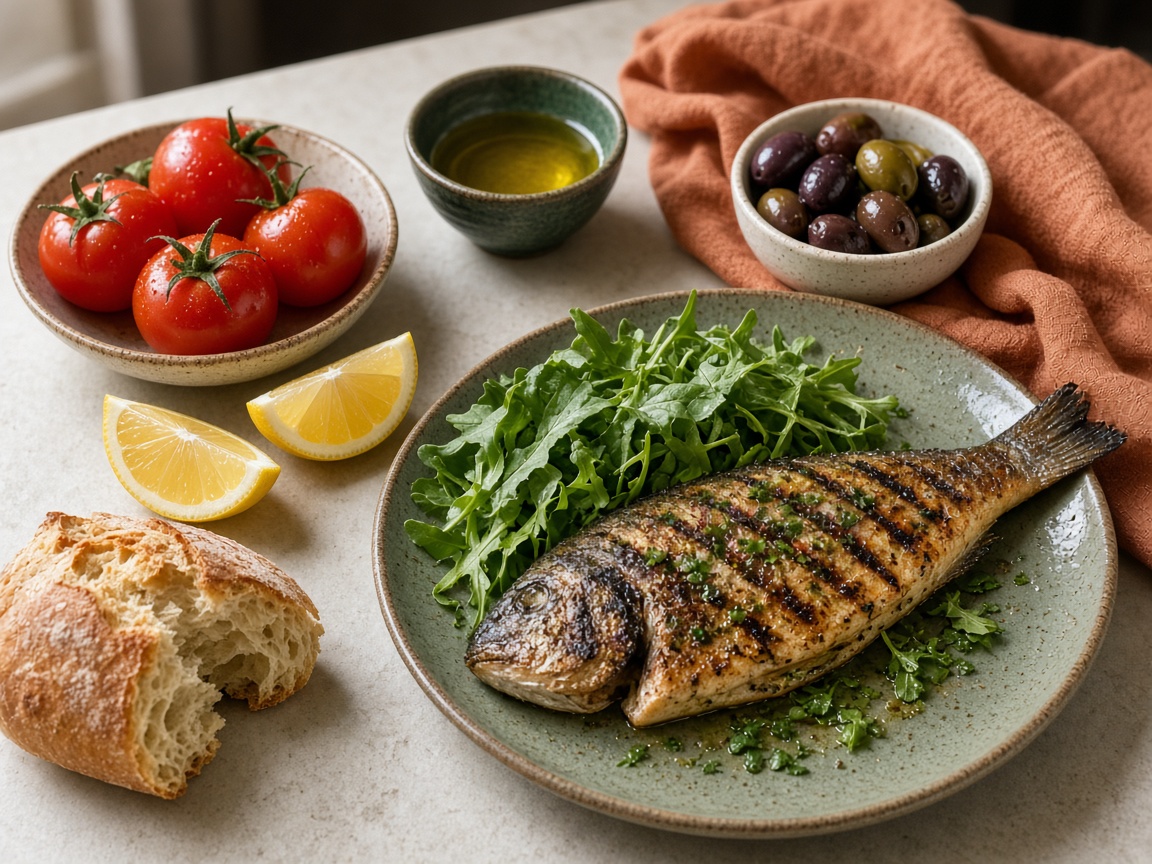
Who was compared with what
The people in the trial were adults whose cardiovascular risk was already high. A headline that says the oil is 'for everyone' replaces that group. One group followed a Mediterranean diet supplemented with extra-virgin olive oil. The other followed a Mediterranean diet supplemented with mixed nuts. Both were compared with people advised to eat less fat.
The comparison is a whole pattern of eating set against advice to eat less fat. A spoon of oil alone, a handful of nuts on top of the old menu, or a 'Mediterranean' dinner with no comparison is a different story. The trial does not pull one food out of an otherwise empty plate.
What was reported about events
The outcome this page can state plainly is major cardiovascular events. Both Mediterranean groups had fewer of those events than the group advised to eat less fat. The page keeps the word 'fewer' and does not turn it into a percentage, a share, or one reader's personal chance.
An event and a kilogram on the scale are different outcomes. 'Fewer events' does not say how weight changed, or whether it changed. The trial was not set up as weight-loss work, so weight is not filled in from it here.
The 2013 paper and the republication
Randomization is the way people were assigned to groups, not a score for a dish. The 2013 text had problems with that assignment. The journal retracted it. In 2018 a new text of the same work appeared. Reading the withdrawn version as if it had never been withdrawn skips the history of the paper.
The 2018 republication still reported fewer events in the Mediterranean groups. The retraction does not erase that sentence, and it does not license a percentage beside it. The honest retelling is short: assignment problems happened, the paper was published again, and the report of fewer events remained.
What is not added to the trial
Oil and nuts in this work sat inside a Mediterranean pattern and inside a comparison with advice to eat less fat. They are not described here as something that burns fat. This page has no 'burning' mechanism, because that mechanism is not in the result it is allowed to retell.
The article explains someone else's trial. It does not prescribe a diet to a person whose heart is already under treatment, and it does not replace a clinician. The bot can log oil and nuts as food. It does not switch on a PREDIMED mode or promise events or weight.
What this text draws on
- Estruch R. et al., PREDIMED, N Engl J Med: adults at high cardiovascular risk; a Mediterranean diet supplemented with extra-virgin olive oil, or with mixed nuts, compared with advice to eat less fat; fewer major cardiovascular events in the Mediterranean groups. The 2013 paper was retracted and republished in 2018 because of randomization problems; the republished paper still reported fewer events. Not a weight-loss trial.
A short paraphrase of open guides and reviews (WHO, national recommendations, peer‑reviewed summaries). Not a quotation and not a treatment protocol.
Short answers
Was this a weight-loss trial?
No. It looked at major cardiovascular events in adults at high cardiovascular risk. It was not a weight-loss trial.
Can the 2013 text be cited as the final paper?
It was retracted because of randomization problems. The living text is the 2018 republication, which still reported fewer events. This retelling does not add a percentage.