The DASH trial and the DASH eating plan are two different texts
The DASH trial is the 1997 New England Journal of Medicine paper by Appel and colleagues. A diet high in fruit, vegetables, and low-fat dairy and lower in saturated fat lowered blood pressure compared with a typical American diet. NHLBI later turned that pattern into the DASH eating plan and wrote the sodium as 2,300 mg or 1,500 mg. The paper and the plan are not one document, and this page gives no millimeters of mercury.

What the trial compared
The 1997 trial compared patterns of eating. On one side was food high in fruit, vegetables, and low-fat dairy, and lower in saturated fat. On the other side was a typical American diet. The outcome was blood pressure. Pressure was lower on the first pattern than on the typical diet.
Lower is the direction of a group comparison, not a personal number. The page deliberately names no millimeters. A retelling that inserts its own figure is no longer the Appel paper. The trial is also not retold here as weight-loss work.
How the plan differs from the paper
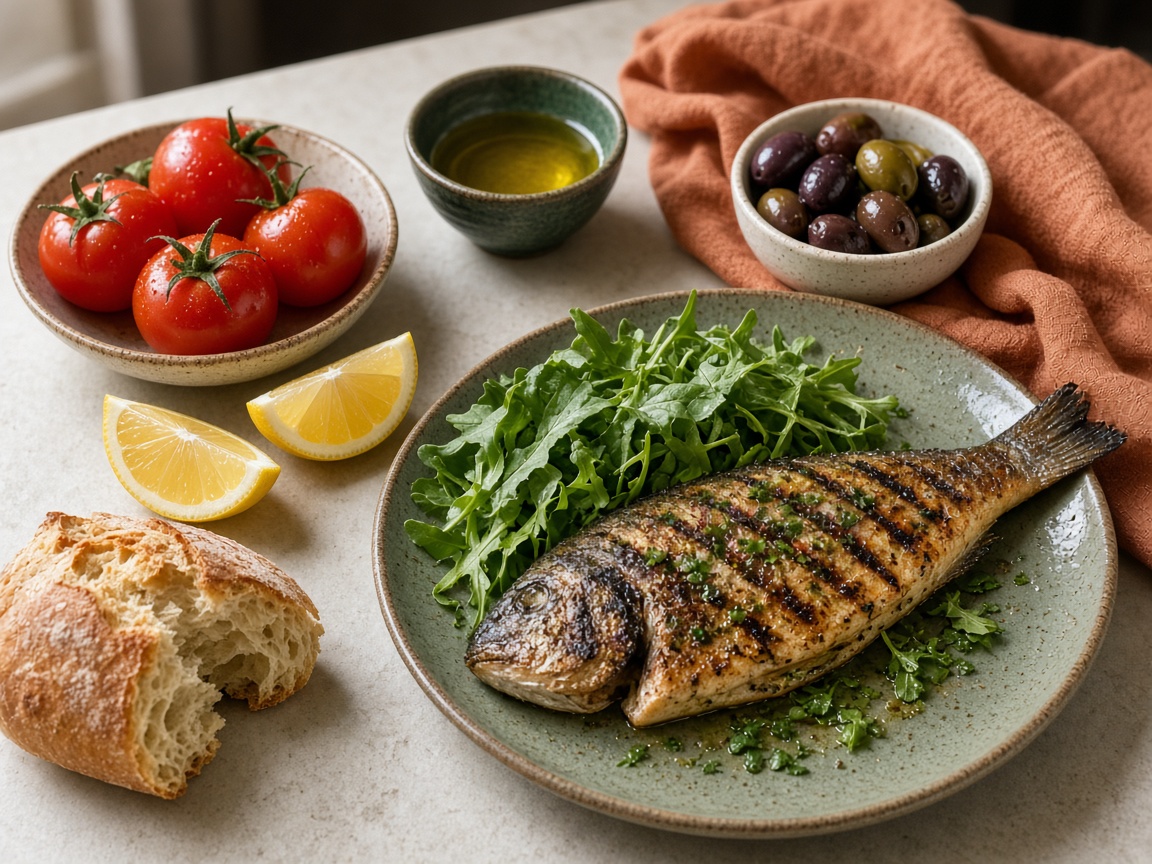
The NHLBI DASH plan is a public plate pattern built from that same picture: fruit, vegetables, low-fat dairy, less saturated fat. The pattern is there so a person can assemble an ordinary day. It is not a second blood-pressure measurement in the same people, and it does not rerun the 1997 trial.
When a headline says 'DASH lowered pressure by…', it helps to ask which text is meant. If it means the paper, this retelling has only 'lowered compared with a typical American diet.' If it means the plan, the plan teaches how to assemble food. It does not print a personal pressure forecast.
Sodium lives in the plan
The sodium figures 2,300 mg and 1,500 mg are written in the NHLBI eating plan. They are two lines of one public plan, not a result this page takes from the 1997 paper. Mixing them assigns the trial a comparison this retelling does not contain.
Which line to choose for a person with kidney disease, blood-pressure tablets, or other treatment is not this page's decision. The arithmetic '1,500 is less than 2,300' does not turn the plan into a promise about how far pressure will move. That size is not here.
A day at home and a group result
At home a person builds the plate. The trial describes a comparison of groups on its diets. A similar set of foods is not a promise that one reader's pressure will repeat the group result. The result, as given here, also has no number.
A food log can show whether fruit, vegetables, and low-fat dairy were in the day. It does not measure pressure and does not replace a cuff or a clinician. The bot counts the plate as food. It does not derive sodium targets or blood pressure from the 1997 paper.
What this text draws on
- Appel L. J. et al., N Engl J Med, 1997: a diet high in fruit, vegetables, and low-fat dairy and lower in saturated fat lowered blood pressure compared with a typical American diet.
- NHLBI DASH Eating Plan: the public eating plan built from that dietary pattern; sodium 2,300 mg or 1,500 mg. The plan and the 1997 paper are different documents.
A short paraphrase of open guides and reviews (WHO, national recommendations, peer‑reviewed summaries). Not a quotation and not a treatment protocol.
Short answers
Are the DASH trial and the DASH plan the same thing?
No. The 1997 NEJM trial by Appel and colleagues compared a dietary pattern with a typical American diet and looked at blood pressure. The NHLBI plan is a separate text that states sodium as 2,300 mg or 1,500 mg.
How far will my blood pressure fall?
That figure is not here. The trial speaks about a comparison of groups. Millimeters are not part of this retelling.